
Service Details
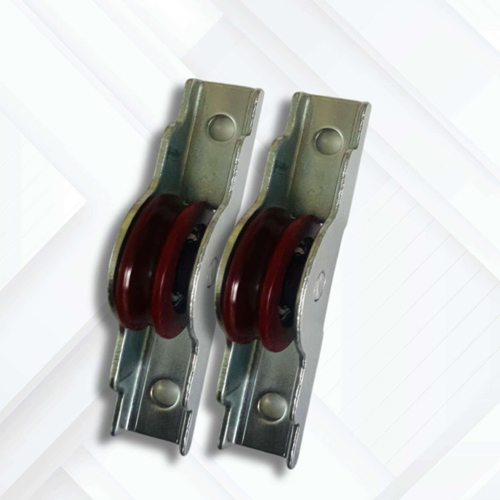
Single Wheel Ball Bearing Roller in Delhi NCR, Faridabad, India
The single wheel ball bearing roller is a crucial component in modern mechanical systems across Delhi NCR, Faridabad, and throughout India. It plays a key role in ensuring smooth, efficient, and low-friction rotational movement in various industrial and commercial applications. Whether used in machinery, trolleys, or automated systems, the core technology—ball bearings—drives its performance and reliability.
Understanding the Mechanism: Ball Bearings
At its core, a ball bearing is a rolling-element bearing designed to minimize friction and support rotational motion. It consists of four essential components:
Inner Ring (Race): Mounted on the rotating shaft to enable smooth movement.
Outer Ring (Race): Fixed within the housing or wheel structure.
Rolling Elements (Balls): Hardened steel or ceramic balls that reduce friction during motion.
Cage (Retainer): Maintains equal spacing between the balls and prevents collision.
The primary advantage of ball bearings lies in their ability to convert sliding friction into rolling friction. As the balls rotate between the inner and outer rings, resistance is significantly reduced, ensuring smoother and more efficient operation.
The Single Wheel Configuration
In a single wheel roller system, the ball bearing is positioned at the center, allowing the wheel to rotate effortlessly around an axle. This setup is widely used in industries and applications across Faridabad and Delhi NCR where smooth motion and durability are critical.
Low Friction and High Speed: The point contact between balls and races reduces friction, making these rollers suitable for high-speed operations such as conveyor systems, electric motors, and mobility equipment.
Combined Load Capacity: Ball bearings can handle both radial loads (perpendicular forces like weight) and moderate axial loads (parallel forces), making them versatile for multiple industrial uses.
Reduced Maintenance: Sealed and shielded bearings protect against dust and moisture, which is especially beneficial in industrial environments in India. This extends lifespan and reduces maintenance needs.
Cost-Effective Solution: Due to their standardized design and wide availability in Delhi NCR and Faridabad markets, ball bearings are affordable and easy to replace, making them a practical choice for businesses.
Frequently Asked Questions (FAQs)
Q1. What is a single wheel ball bearing roller used for?
A single wheel ball bearing roller is commonly used in trolleys, conveyor systems, sliding mechanisms, and industrial equipment to ensure smooth and low-friction movement.
Q2. Why are ball bearings important in rollers?
Ball bearings reduce friction by converting sliding motion into rolling motion, improving efficiency, speed, and durability of the system.
Q3. Can these rollers handle heavy loads?
Yes, most ball bearing rollers are designed to handle both radial and moderate axial loads, making them suitable for various industrial applications.
Q4. Are these rollers suitable for use in Delhi NCR and Faridabad conditions?
Yes, sealed ball bearings are designed to resist dust and moisture, making them ideal for industrial environments in Delhi NCR, Faridabad, and across India.
Q5. Do ball bearing rollers require regular maintenance?
Minimal maintenance is required, especially when using sealed or shielded bearings that retain lubrication and prevent contamination.
Feel free to contact us with any questions or concerns
you may have. We’ll always be happy to assist.
- 9220233993
- info@zyolo.in