
Service Details
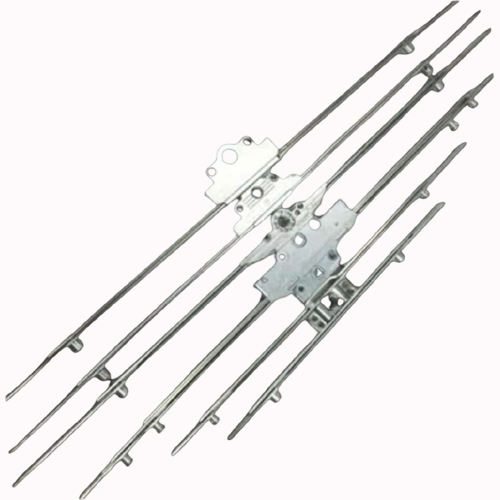
Casement Espag Supplier in Delhi, Noida & Faridabad
The Casement Espag system (Espagnolette locking mechanism) is a modern multi-point locking solution used in uPVC and aluminium windows and doors. It provides enhanced security, durability, and weather sealing compared to traditional locking systems.
As a trusted casement espag supplier in Delhi NCR, Noida, and Faridabad, we offer high-quality locking systems designed for both residential and commercial applications.
Function and Operation
The espag locking system operates through a single handle that controls multiple locking points along the window or door frame. When the handle is turned, a central gearbox activates a metal rod, engaging all locking points simultaneously.
This mechanism ensures strong sealing, improved insulation, and enhanced safety, making it ideal for modern window and door systems.
Key Components of Casement Espag System
- Espagnolette Bar (Gear Rod): A long metal strip that runs along the sash and holds multiple locking points for proper alignment.
- Gearbox Mechanism: Converts handle rotation into linear movement to activate the locking system.
- Locking Points (Cams / Mushrooms / Hooks):
• Mushroom Cams – High security against forced entry
• Roller Cams – Better sealing and compression
• Hooks / Shootbolts – Strong locking for heavy-duty applications - Keeps (Strikers): Mounted on the frame to receive locking points and ensure proper alignment and sealing.
- Handle and Spindle: Used to operate the system, available in multiple finishes for modern interiors.
- Backset Measurement: The distance between handle spindle and espag bar, important for correct installation.
Key Features and Benefits
- Multi-Point Locking System: Provides superior security compared to single locks.
- Weatherproof Sealing: Prevents dust, air leakage, and water entry.
- Smooth Operation: Easy to use with a single handle mechanism.
- Durable & Long-Lasting: Made from high-quality materials for long-term use.
- Low Maintenance: Requires minimal upkeep while ensuring consistent performance.
Applications
- uPVC casement windows and doors
- Aluminium window systems
- Residential homes and apartments
- Commercial buildings and offices
Trusted Casement Espag Supplier in Delhi NCR
If you are looking for a reliable casement espag supplier in Delhi, Noida, or Faridabad, we provide high-performance locking systems that ensure safety, durability, and smooth operation.
Upgrade your windows and doors with advanced espag locking systems and experience enhanced security, better insulation, and modern functionality.
Frequently Asked Questions (FAQs)
Q1. What is a casement espag system?
A casement espag system is a multi-point locking mechanism used in windows and doors for enhanced security.
Q2. How does an espag lock work?
It uses a single handle to control multiple locking points along the frame.
Q3. What are the benefits of espag locking systems?
They provide better security, sealing, and smooth operation compared to traditional locks.
Q4. Are espag locks suitable for uPVC windows?
Yes, they are widely used in uPVC and aluminium window systems.
Q5. What is backset in espag systems?
Backset is the distance between the handle spindle and the front face of the locking bar.
Q6. Are espag locks durable?
Yes, they are designed for long-lasting performance with minimal maintenance.
Q7. Can espag locks improve insulation?
Yes, they ensure tight sealing, reducing air and water leakage.
Q8. Where can I buy casement espag in Delhi NCR?
You can buy high-quality espag locking systems from trusted suppliers in Delhi, Noida, and Faridabad.
Feel free to contact us with any questions or concerns
you may have. We’ll always be happy to assist.
- 9220233993
- info@zyolo.in